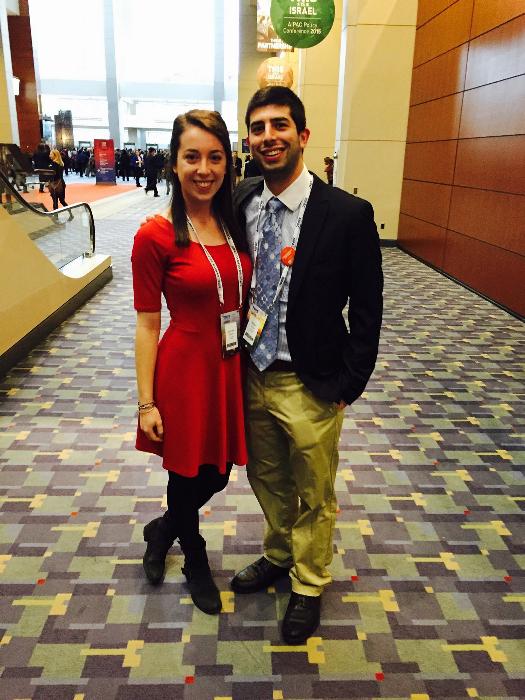
Not only are there riveting lectures to go to at any moment, but also the amount of interactions and connections that happen between attendees of the conference is enormous. Young and old attend AIPAC’s policy conference, making it one of the most incredible sites of playing the game of Jewish geography. With so many like-minded people, many of whom know each other due to the widespread nature of the Jewish community, this conference ignites a hugely uplifting feeling of solidarity for Israel and unity.
During the third day of the conference, all 15,000 attendees are mobilized to Capitol Hill where they lobby their Congressmen directly. This deployment of pro-Israel activists to the offices of Representatives and Senators symbolizes the huge impact of AIPAC’s work. Not only does the organization employ professional lobbyers to get the pro-Israel voice heard in the legislative branch, it also empowers its members to act on their views. AIPAC’s policy conference is the best place to actively show support for Israel and exercise our rights as United States citizens to make sure Congress backs Israel, our treasured ally in the Middle East. Personally, I find AIPAC Policy Conference to be close to a cathartic experience. I am able to express my positions on Israel with like-minded people, as well as with passionate people who disagree with me. I am able to learn from and pose challenging questions to even the most well-known intellects. Finally, it is extremely rewarding to be able to march up to Capitol Hill with an agenda and be the voice for a Israel, a nation that means so much to me. -Jennifer Sachs Class of 2018
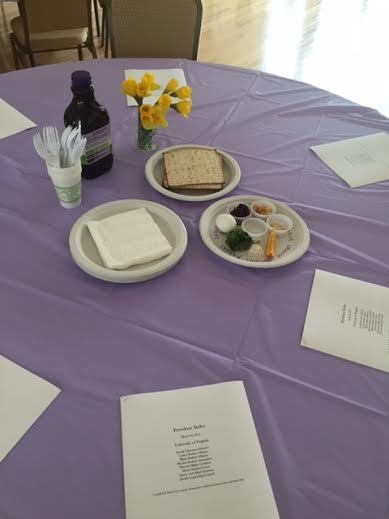
We had approximately 35 people attend the Freedom Seder, and JEI co-sponsored the event with the Black Student Alliance, Queer Student Union, Latino Student Alliance, Minority Squared, the Jewish Leadership Council, and various other student groups. The Seder included traditional Passover practices, such as reciting the Four Questions, but each ritual contained a social justice component as well. Pharaoh’s plagues were accompanied by ten modern day plagues, like HIV/AIDS and environmental destruction. The Seder Plate included an orange, to symbolize the acceptance of gays and lesbians at the Passover meal. And for every cup of wine (grape juice), we posed a discussion question so that those at each table could engage in conversation about different topics raised throughout the service. I found that everyone was very receptive to the dialogue. The luncheon that followed also gave people a change to continue discussing some of the Seder subjects, as well as an opportunity to lounge on the couch and watch UVA battle Michigan State in the NCAA tournament.
At the end of the Seder, we asked, “What can we do in our everyday lives to instill the change that we want to see in the world?” Issues, such as sexual assault and racial discrimination, to name a few that our community has faced this past year, demand that we tackle this question. I am proud that JEI was able to provide a platform, inclusive of various religious and racial identities, toward coming up with a cogent solution. As we are reminded during Passover, Jews were once slaves in the land of Egypt, but we are never truly free unless we demand human rights and civil liberties for all that share our space. -Emma Cohen, Co-Chair of the Jewish Education Initiative Class of 2015
The trip was well timed in another way as well. Although the congregants we met were passionate about their Jewish heritage and culture, the economic challenges of the Delta are increasingly driving young Jews (and other young people with the resources to leave) away from the region. The synagogues we visited were as beautiful as any I’ve seen in New York or in Israel, but the force of vacancies in the towns around them might eventually overcome the vivacity of Jewish life.
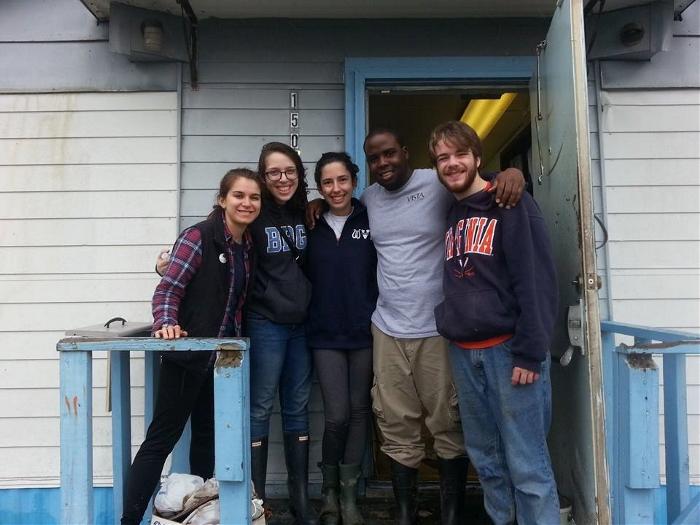
At Mississippians Engaged in Greener Agriculture, or MEGA, we learned how to care for chickens, build rabbit coops, and prepare soil for planting. We also worked in the food pantry, preparing boxes to be picked up. At first, the food pantry work confused me: MEGA aims to reduce diet-related illness by providing fresh fruits and vegetables, but we were handing out packages of processed foods, high-sugar desserts and low-nutrient canned goods, all donated by Wal-Mart. How could the food pantry and the garden outside be part of the same organization? Were they truly working toward the same goal? Over the course of the week, we were fortunate to be able discuss these questions. We realized that although healthful food is the ultimate goal, any food is better than no food. We also came to understand that the boxes handed out in early March, well before the harvest season, are not representative of those provided at other times in the year. Driving around the Delta, I was exposed to a part of American life that I had not seen up-close before. Growing up in one of the nation’s wealthiest counties and then moving to a college town, I’d never imagined towns where the majority of the stores were shut down, where the only place to get something to eat was at a gas station. I’ve also been fortunate to always have a sizable Jewish community around me. Before hearing the stories of Jews in Cleveland and Greenville, I couldn't imagine being the only Jewish student in school, or barely having enough Jewish adults in town to make a minyan. At the same time, I realized that the experiences of people in the Delta - both Jews and non-Jews - are not so different from mine. I have also had to make choices about maintaining Jewish customs or assimilating. I’ve also observed inequalities and racism. Many people we spoke with in the Delta asserted that Mississippi’s experience shines a spotlight on problems the entire United States faces. They said that their communities are not the only ones with injustices and lack of opportunity, but because the disparities are so great in Mississippi, the nation notices them more. Our local guides did not see this spotlighting as a problem - in fact, some maintained that the extra attention motivates Mississippians to make positive change, and that Mississippi leads the country in this initiative as well. Three nights after returning to Charlottesville, an incident of police violently arresting a black third year University student showed me the wisdom of those opinions. We cannot escape injustice by getting on a plane and leaving Mississippi. Right here in Virginia, less than a mile from my apartment, footsteps away from our beloved Grounds, a third year student was beat up by officers of the Virginia Alcoholic Beverage Control (ABC), presumably for trying to use a fake ID to get into a bar. I don’t know the specifics of the situation, so it would be unfair to say that Martese Johnson was beat up and arrested because he was publicly drunk, or because he is black. But I do know that on any given night on the Corner, and especially on a warm St. Patty’s evening, there are many students, black and white, 21 and underage, partying in the bars and belligerently drunk on the street outside them. I’ve never heard of an incident of police brutality on the Corner before - in fact, I am usually amazed at how little the local police respond to the underage drinking that occurs every night - so I have to wonder why this happened to Martese. It should not have happened to anyone. Martese’s story has shown me that we need to learn from the Mississippians we met and from the Jewish values of Tikkun Olam that we discussed last week. If we see injustices, we must work to resolve them. Violent acts like those in the video of Martese on the sidewalk cannot be tolerated, no matter the race of the people involved. Charlottesville, like the Mississippi Delta, has its own challenges, and we must all work to overcome them. -Sarah Hainbach Class of 2015
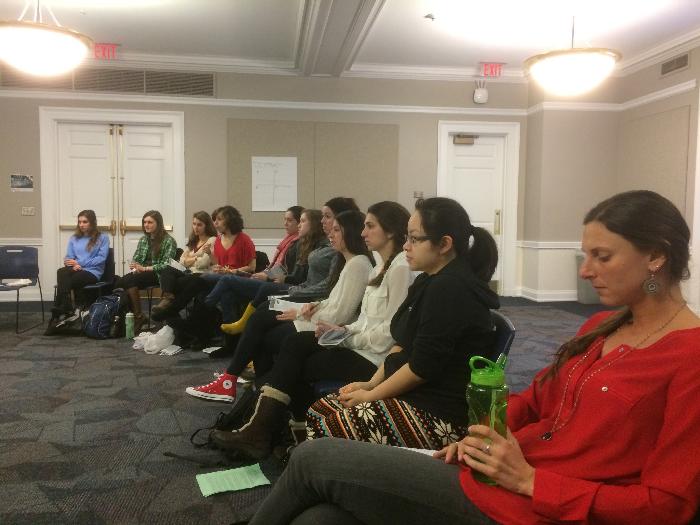
In addition, we discussed how “checking in” or monitoring a situation while out on a Friday night does not suggest a negative assumption regarding the personality of the participants – rather, this intervention represents our responsibility to create a Community of Care, in addition to upholding the Community of Trust we all value so highly. We learned that the three D’s of intervention are: (1) Direct: check on individuals involved; (2) Delegate: get someone else to step in; (3) Distract: create a diversion to diffuse the situation.
The Overview Talk was personal for me, as I am active in the sexual assault advocacy community through Take Back the Night, and one of my undergraduate majors, Women’s Studies. The main objective of Green Dot is to encourage students to proactively, and retroactively as needed, diffuse Red Dot situations and eliminate the social acceptance of Red Dot behaviors. Looking at a map of Grounds filled with green dots superimposed onto red dots, I found myself feeling thankful for the positive, safe environment provided by Hillel staff at the Brody Jewish Center. Next steps include extending this feeling of community and safety to all of Grounds. I realize now, as a fourth year, how integral the wonderful, secure community of Hillel has been for me throughout college. Moving forward, I hope you will keep an eye out – we will host a separate Ask Big Questions discussion on the intersection of Judaism, communal responsibility, and bystander intervention on Grounds later this semester! Haley Swartz Class of 2015
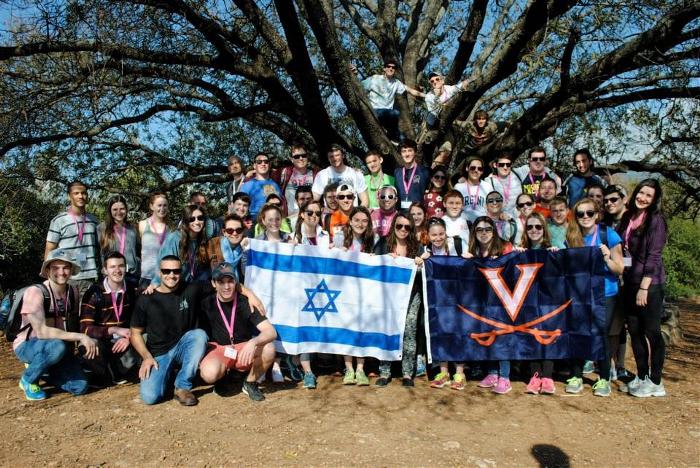
Before the speeches and activities began, we sat down for lunch, and I was able to meet a few of the Israelis. This winter I traveled to Israel on Birthright with Hillel at UVa, and we were able to bond about the experience- we even had mutual friends on Facebook (insert Jewish geography joke)! I’ve always been impressed with the way Israelis carry themselves, specifically in their levels of maturity. I spoke with one of the Israelis named Or, who is also a brother of AEPi at IDC Herzliya. We came to the conclusion that because of the lifestyle they live in Israel – with the army and the type of people – there is an emphasis on independence and early learning. He said that in the army you learn things that cannot be taught in school like meaningful lessons in accountability and responsibility.
Later, I sat down with two Israelis, Dor and Avi, for an activity that involved depicting America or Israel through the others’ eyes. Dor and Avi spoke about what they thought America meant to them, their parents, their friends and to Americans, and I did the same for Israel. They shared the typical stereotypes of college parties and big business, but they also pointed out some more interesting complexities of American culture. Seeing that they do not see every piece of American news, they focused on the bigger, controversial stories as thematic of American culture. Things like race, the two party system and safety. I went on to describe my sentiments toward Israel and how much it means to my family living in America and in Israel. Dor, Avi and I really bonded over our shared passion for Israel, and it made me remember the great times I had this winter on Birthright. Overall, I was so excited to help host this group of Israelis and I hope they come back soon! Zach Gelfand Class of 2017
We all split up the tasks of who was going to supply what, and who was going to be there to set up, clean up, and host at specific times. I had the huge responsibility of providing the cookies – the baking of them was a fabulous study break, and no one is going to complain about nibbling on some of the extra cookie dough! Rachel Ross brought the pumpkins, and people signed up in teams to carve the pumpkins eloquently. Someone created a “V” with a saber. One pumpkin read “Go Hoos!”, and another person carved out a crescent moon. There were some other very clever designs for the pumpkins, as well.
Since the event was during a two-hour period, people trickled in and out as the afternoon rolled on. First through fourth-years attended, and it was great to see some intermingling between the first-years and some upperclassmen. Personally, my friends and I bonded with some new friends over Taylor Swift's amazing new album that was just released. If that doesn't create a lasting friendship, I don’t know what will! -Dana Wilson, Peer Network Engagement Intern Class of 2017
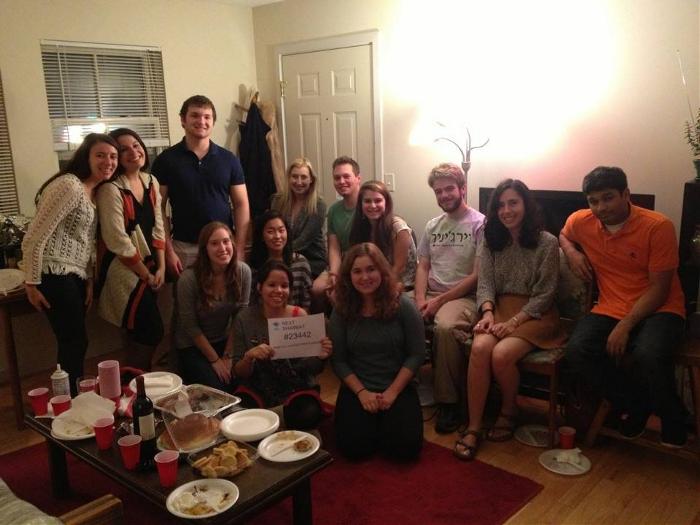
This was the third year that my roommates and I hosted SHAG in our apartment – how time flies! I invited new and old friends from Hillel and classes. Hillel provided challah, chicken, and grape juice, and everyone brought a dish to share. We had kugel, green beans, potato waffles (like latkes, but in waffle form!), and lots of other delicious food. As always, I worried that there wouldn’t be enough food, and as always, there was more than enough (yay leftovers!). We lit the candles, blessed the wine, and ate. Everyone who came knew someone, but no one knew everyone, so we went around the circle and did some cheesy icebreakers. What’s your name? What good thing happened to you this week? Everyone met someone new and had a chance to reconnect with old friends.
In college, it can be easy to lose sight of Shabbat. We have books to read, papers to write, programs to code. But I’d like to suggest that the intensity of our schedules makes celebrating Shabbat even more important. Whether we mark the new week with a prayer, a nice dinner, or even a run, taking time to reflect and relax prepares us for the work ahead. -Sarah Hainbach Wa-Jew Class of 2015
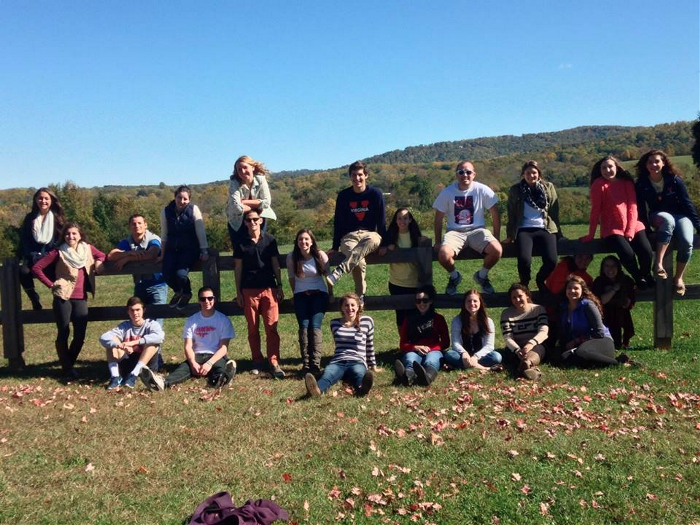
Since that first event we have participated in a number of other activities that have allowed us to make even more connections. We tie-dyed shirts, picked apples at Carter Mountain Orchard, and most recently went on a sunrise hike on Humpback Rock. I also cannot forget to mention the acclaimed Bagels on the Lawn every week, which an increasing number of first years have been attending. I honestly did not know what to expect out of Hillel, but I have gotten more excited with every event.
As a first year representative, I have also had the opportunity to get more first years involved-- whether that be through promotion of events or just talking to people about what they are looking to get out of Hillel. About two weeks ago I had an idea to organize a first year dinner at one of the dining halls in order for people to get to know each other outside of a Hillel-sponsored event. The turnout wound up being great and there were even a few new faces. This past week we also had our first year retreat and first year movie night, which both went extremely well and seemed to make everyone enthusiastic for the rest of the year. It has been a great experience getting to know my fellow WaJews and I am excited to continue this journey during the next four years. -Julia Pascal Wa-Jew Class of 2018 |
The Brody Jewish Center, Hillel at the University of Virginia, is the focal point in a renaissance of Jewish life for the 1,000 Jewish students on Grounds. Archives
September 2021
Categories
All
|

 RSS Feed